Structural integrity assessment of mechanical and pressurised equipment can be undertaken to demonstrate integrity at the design stage, throughout operating life or following abnormal loading conditions.
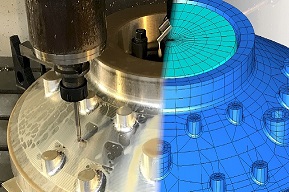
In addition to experience in the use of assessment methods based on the design-by-rule approach, our engineers have extensive expertise in the use of finite element stress and thermal analysis techniques, fatigue life prediction and defect assessment methods which can be used, for example, to formulate safety cases for economical plant life extension. While fatigue life assessment on new plant is most often undertaken using rules in ASME VIII-2 Part 5 or PD5500 Annex C, fitness-for-service and defect assessment of existing structures is normally carried out in accordance with established methods in ASME FFS-1 / API 579 & BS 7910, in which the higher 'levels' of assessment can provide increasingly accurate and less conservative results.
Two areas in which the use of integrity assessment methods can be of benefit are the re-rating of existing equipment and in plant life assessment and extension.
The need for re-rating of existing equipment can be driven by any one or a combination of the following:

Such work is sometimes required by third parties as part of the safety case submission required to grant a licence for plant operation. FCL’s approach to re-rating, employing a combination of established design code rules and the application of design-by-analysis methods, together with their experience in the presentation of such work to third parties, can provide a cost effective alternative to equipment replacement and/or modification.
The requirement for life assessment can arise in the original mechanical design specification, as a result of changes in operating conditions during normal plant life, or as a result of adverse findings from routine inspection.
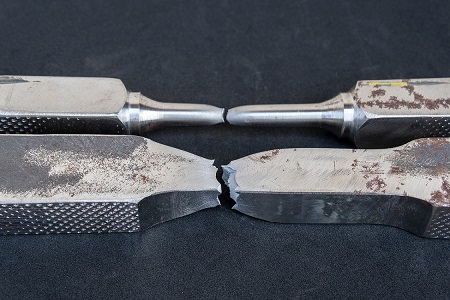
Fatigue life assessments can be carried out on the basis of established design code methods using cyclic stresses calculated using code, classical or design-by-analysis methods, or in line with rules based on experimental work. While the design of new plant for cyclic service is covered as part of FCL’s design services capability, the application of fatigue life and defect assessment methods on existing plant can offer a cost effective alternative to rectification or equipment replacement.
FCL’s structural integrity assessment service also allows the significance of defects found during routine non-destructive examination or changes in cyclic operating conditions to be assessed.
The increasing use of fitness-for-service and defect assessment procedures such as ASME FFS-1 / API 579 & BS 7910 is evidence of the economic benefits that can be achieved using this approach, by allowing plant operators to defer repair or replacement of major items.
FAQs
Added January 2026.
A structural integrity assessment involves the preparation of calculations and/or analyses to demonstrate the adequacy of a piece of equipment for its intended service. This assessment can be carried out at the design stage, throughout the operating life or following abnormal loading conditions or the discovery of damage. It can include fatigue assessment and/or defect assessment to establish the resistance of the structure to cracking. Such an assessment, if successful, can be used to justify continued operation of the equipment, which can offer large savings by avoiding unscheduled plant shutdowns and premature replacement. Alternatively, a structural integrity assessment can also be used to underwrite the re-rating of existing equipment to accommodate revised operating conditions.
Fitness-for-service assessments are most commonly prepared in accordance with API 579-1/ASME FFS-1, but FCL also has experience in the use of defect assessment methods provided in BS 7910.
The most common driver for re-rating or life extension of existing equipment is the discovery of excessive corrosion, such that the minimum remaining wall thickness is less than the original design thickness. Another reason for re-rating equipment is to accommodate revised operating parameters, which may be necessary to increase plant capacity.
We commonly carry out fatigue assessments in accordance with rules provided in ASME Section VIII Division 2 Part 5 and PD5500 Annex C. Both of these methods permit derivation of the safe operating life of equipment subject to cyclic loading. We carry out defect assessments in accordance with API 579-1/ASME FFS-1 or BS 7910, which both provide rules to enable evaluation of the significance of crack like defects.
Yes, we have extensive experience in establishing the significance of cracks, corrosion or other damage discovered during inspection. This typically involves the preparation of a fitness-for-service assessment in accordance with API 579-1/ASME FFS-1 or BS 7910.
Yes, we have extensive experience in the preparation of fatigue life assessments for equipment operating under cyclic service conditions. Such assessments may be based on cyclic stresses calculated either by code rules or by design-by-analysis methods.

Please use this form if you have any questions about our capabilities or would like to obtain a quotation.
Alternatively, you are welcome to call or contact us by e-mail.
+44 (0)1992 585450 enquiries@finglowconsultants.co.ukYour enquiry has been safely and securely received. Our office is open weekdays from 9am to 5pm - you can expect a response during the next 2-3 working hours.